ultimate translation selector

Saturday, January 14, 2006

Sunday, January 01, 2006
Get Your Butt Out There and Catch Some Fishes!
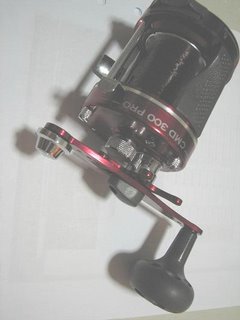
I didn't know what struck me. It might be having spent the end year celebration counting down at BJT (bedok jetty) that got me interested. There were numerous people fishing there and there were some interesting catches, like a small octopus, for example. Anyway, for some reasons, I woke up one morning and decided that I had to learn to catch fish. Got my first reels from Changi Pro. A Surecatch Cmd 300. Hope that I "sure" can "catch". Garang a bit. Going for a baitcaster. Couldn't fish, look pro can already. Later found out that no one even mentioned this reel, even for budget one. Haz. And I got 2??


Interesting Catches
4.5kg Queenfish - Ryobi Regno, Record 40, Fireline 10 lbs, LSBF size 1/0, live tamban, 3rd Feb 07, 4pm, Ah Ngan Kelong
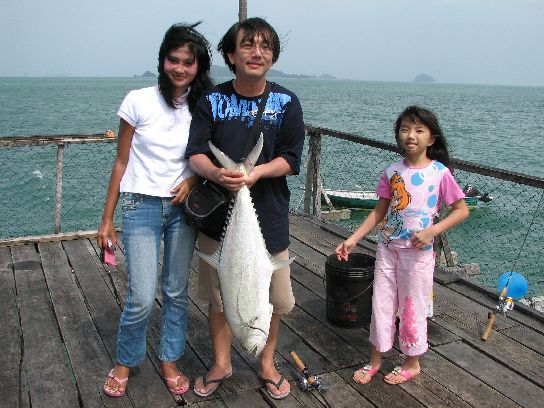
4kg marine catfish (Duri) - Loomis big game, Surecatch Commander Pro 300, Sufix
Xcelon 20lbs, Surecatch apollo size 2/0, live prawns. Night time, incoming tide 8 Apr 06. Bedok Jetty
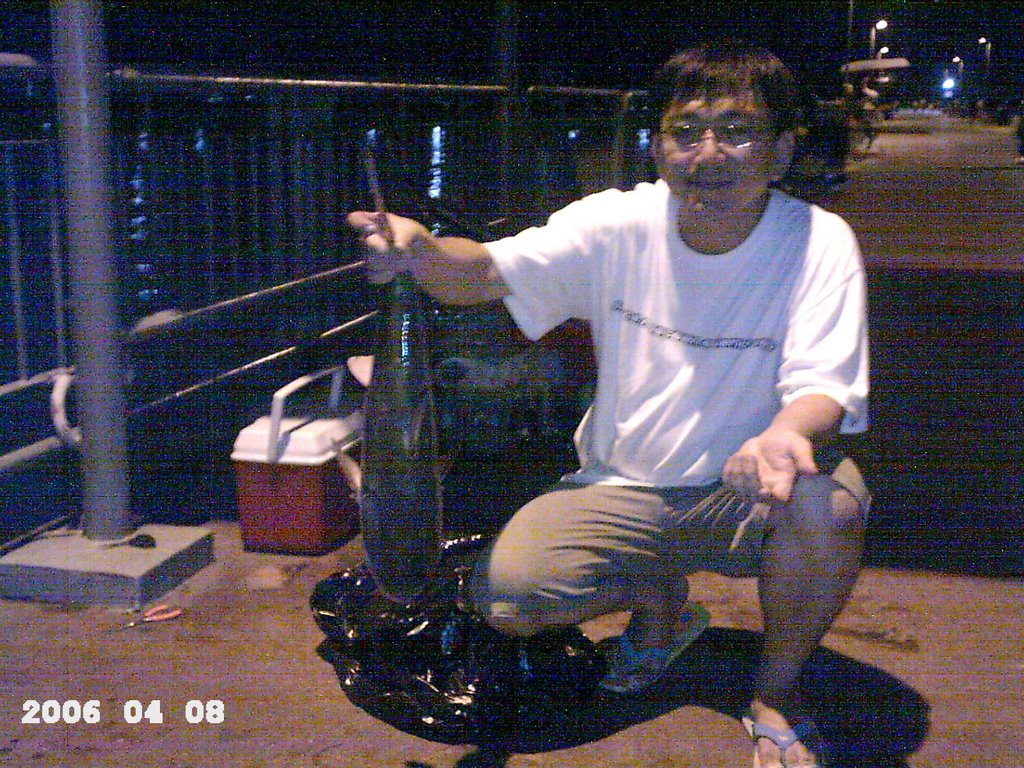
Ribbon on lure! - Ryobi Regno, Record 40, Fireline 10 lbs, Crystal Minnow, 13 May 06, 10pm, Changi Ferry Terminal
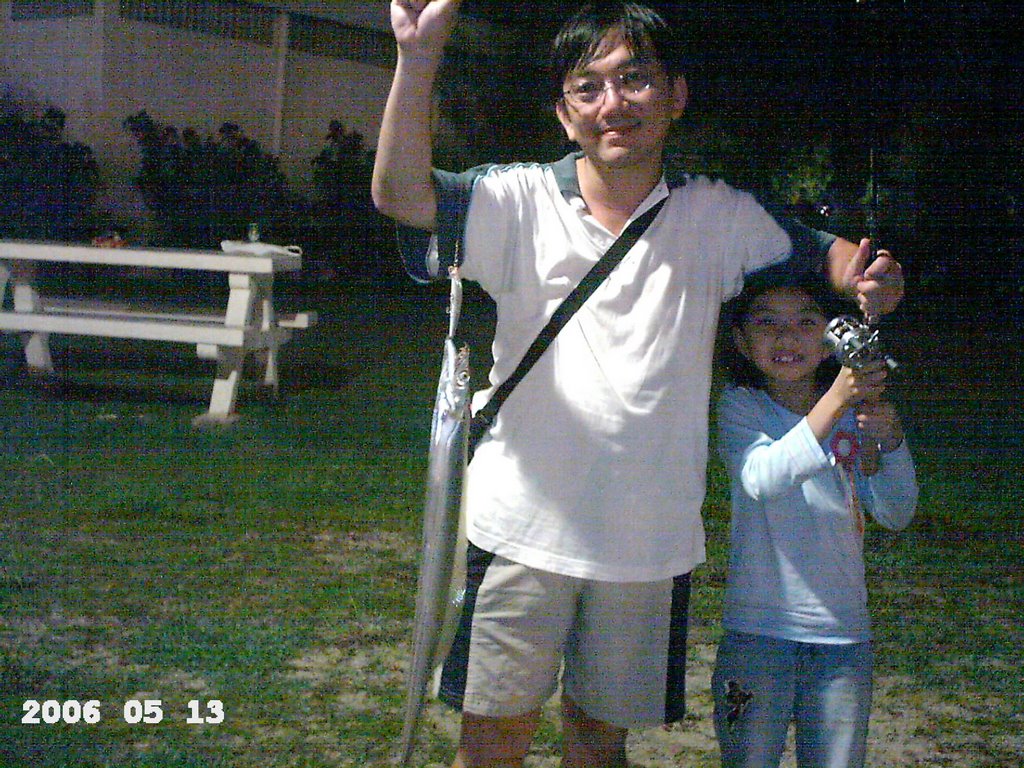
3.5kg Cobia - Ryobi Regno, Record 40, Fireline 10 lbs, apollo size 4, live kunnings, 4rd Feb 07, 10am, Ah Ngan Kelong

~3kg Barracuda - Ryobi Regno, Record 40, Fireline 10 lbs, Single leader with wire, live Mackeral, 27th Apr 07, 5pm, Kelong Acheh

Leopard Whipray (about 2 kg). Lemax Platinum, Shimano Sienna, Fireline 14 lbs, Apollo, Owner hooks, size 1/0, Live prawns. Day time 30 Dec 06. Secret Place
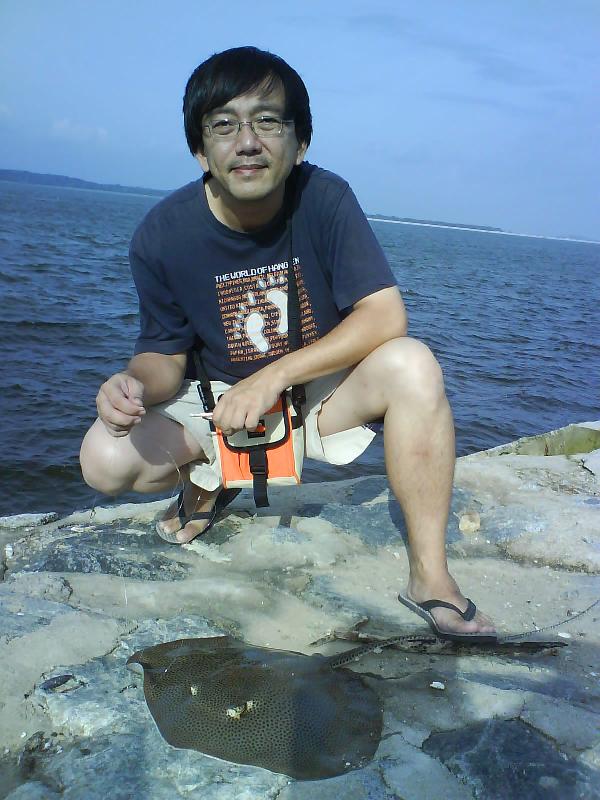
Leopard Whipray - 1+ kg. Shakespeare Contender, Abu D5, Sufix Xcelon 20lbs, own rigged apollo rig, Owner bait hook size 4, live prawns. nighttime, high tide. 25 Aug 06. Six pipes
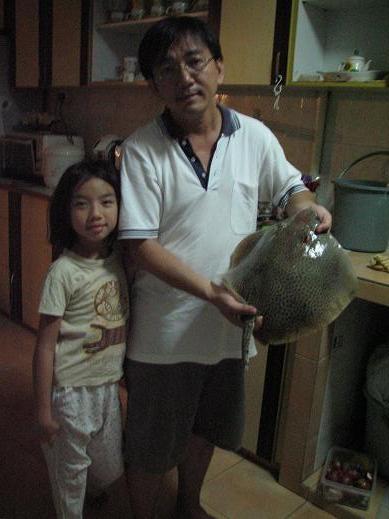
1st and 2nd Diamond Trevallies - 1 1kg, 1 600g. - Shakespeare Contender, Abu D5, Sufix Xcelon 20lbs, own rigged apollo rig, Owner bait hook size 4, live prawns. Daytime 9 Aug 06. Outgoing tide. Kallang river

1st and 2nd Garfishes (todak) - Around 2 ft. Lemax Platinum, Shimano Aerlex, Berkley Trillene 15 lbs, Floater, Owner hooks, size 6, Fish fillet. Day time 15 Dec 06. Ah Fatt Kelong

1st Brown stingray - Rapala sportsmen classic, Shimano Aerlex, Berkley Trillene 15 lbs, own rigged Apollo rig, Owner bait hook size 4, worms (foul hooked). Day time, outgoing tide 6 Aug 06. Pasir Ris beach
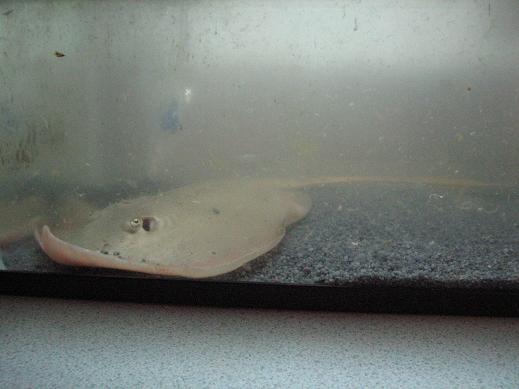
1st 2 feet wolf herring on Jig. - - Rapala sportsmen classic, Shimano Aerlex, Berkley Trillene 15 lbs, white rabbit jig. Night time 31 Sep 06. Hotboys Kelong
1st Sotong - Ryobi Regno, Record 40, Fireline 10 lbs, Yozuri shrimp hunter. Night time 31 Sep 06. Hotboys Kelong
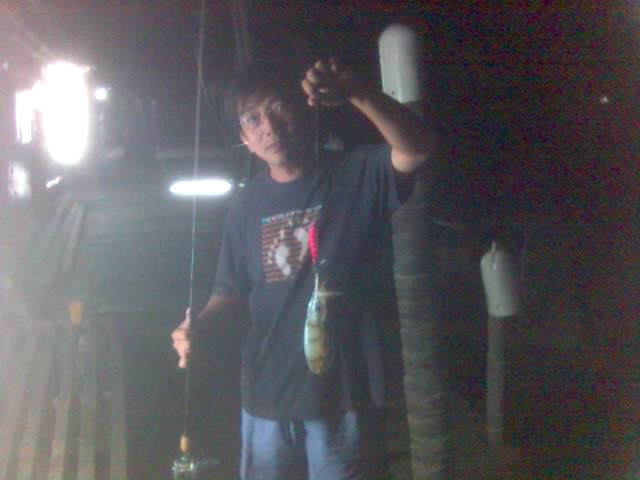
1st and 2nd Barracuda
Shakespeare Contender, Abu D5, Sufix Xcelon 20lbs, Barracuda rig, Owner bait hook size 4, live tamban. Daytime 18 Feb 07. ? tide. Ah fatt kelong
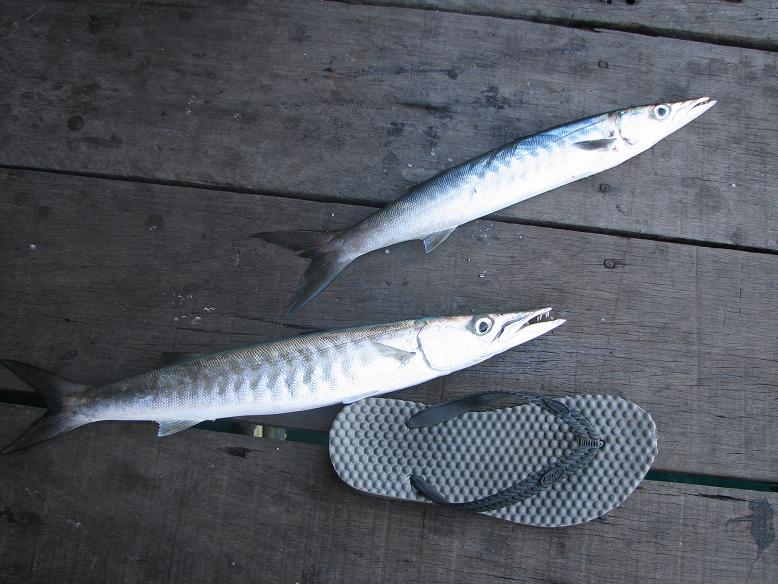
1st and 2nd Parangs on drift bait. Ryobi Regno, Record 40, Fireline 10 lbs, dead tamban rig, 19 Feb 07, early morning, Ah Fatt Kelong
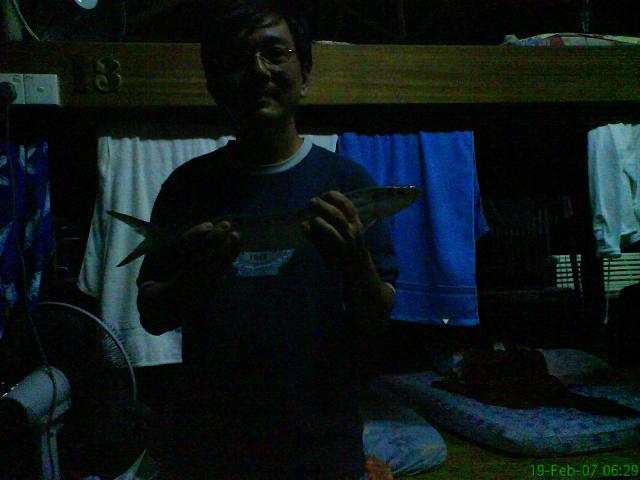
1st Remora landed - Lemax Platinium, Sienna 2500, Fireline 14lbs, Live tamban, Foul-hooked, 31 Mar 07, afternoon, Ah Yew Kelong

1st Decent ACK landed - Lemax President Royal, Sienna 2500, Fireline 14lbs, Live prawn, Running sinker, Circle hook 1/0, 20 Apr 07, Night fishing ~11pm, Incoming tide, SAFYC

1st decent Peacock Bass - Ryobi Regno, Record 40, Fireline 10 lbs, Flouro Yellow Humbug, 20 May 07, 1pm, LSR

Big Green Eye Sotong - Black Rose, Zauber 2000, Fireline 10 lbs, Yozuri Shrimp Hunter 3.5, 9 Aug 07, 3pm. (another similar size at 7+pm), Ah Fatt Kelong

1st Kaci 2.6kg (same day, 3 Kaci, total 4kg) - Ryobi Regno, Record 40, Fireline 10 lbs, 1/0 Circle hook, Whole piece dead sotong, 22 Sep 07, 4am, Elly Kelong

1st KBL - Black Rose, Zauber 2000, Fireline 10 lbs, Size 2 beak hook, Sotong strip, 21 Sep 07, 8pm, Elly Kelong

1st decent size grouper - Ryobi Regno, Record 40, Fireline 10 lbs, Jig head with Powerbait white grub, 18 Oct 07, 2am, Changi Boardwalk

Grunter - Black Rose, Zauber 2000, Fireline 10 lbs, Size 1/0 circle hook, Live prawns, 24 Nov 07, 12pm, Rakit Layang

2.8 kg Barracuda on lure - Ryobi Regno, Record 40, Fireline 10 lbs, crystal minnow, 9 Dec 07, 10pm, Ah Ngan Kelong

~1 kg Threadfin - Black Rose, Zauber 2000, Fireline 10 lbs, Apollo rig size 6 bait hook, 23 Feb 08, 12pm, Rakit Reiza

~1 kg Tengerri on lure - Ryobi Regno, Record 40, Fireline 10 lbs, crystal minnow, 23 Feb 08, 12pm, Rakit Reiza

4kg marine catfish (Duri) - Loomis big game, Surecatch Commander Pro 300, Sufix
Xcelon 20lbs, Surecatch apollo size 2/0, live prawns. Night time, incoming tide 8 Apr 06. Bedok Jetty
Ribbon on lure! - Ryobi Regno, Record 40, Fireline 10 lbs, Crystal Minnow, 13 May 06, 10pm, Changi Ferry Terminal
3.5kg Cobia - Ryobi Regno, Record 40, Fireline 10 lbs, apollo size 4, live kunnings, 4rd Feb 07, 10am, Ah Ngan Kelong

~3kg Barracuda - Ryobi Regno, Record 40, Fireline 10 lbs, Single leader with wire, live Mackeral, 27th Apr 07, 5pm, Kelong Acheh
Leopard Whipray (about 2 kg). Lemax Platinum, Shimano Sienna, Fireline 14 lbs, Apollo, Owner hooks, size 1/0, Live prawns. Day time 30 Dec 06. Secret Place
Leopard Whipray - 1+ kg. Shakespeare Contender, Abu D5, Sufix Xcelon 20lbs, own rigged apollo rig, Owner bait hook size 4, live prawns. nighttime, high tide. 25 Aug 06. Six pipes
1st and 2nd Diamond Trevallies - 1 1kg, 1 600g. - Shakespeare Contender, Abu D5, Sufix Xcelon 20lbs, own rigged apollo rig, Owner bait hook size 4, live prawns. Daytime 9 Aug 06. Outgoing tide. Kallang river

1st and 2nd Garfishes (todak) - Around 2 ft. Lemax Platinum, Shimano Aerlex, Berkley Trillene 15 lbs, Floater, Owner hooks, size 6, Fish fillet. Day time 15 Dec 06. Ah Fatt Kelong
1st Brown stingray - Rapala sportsmen classic, Shimano Aerlex, Berkley Trillene 15 lbs, own rigged Apollo rig, Owner bait hook size 4, worms (foul hooked). Day time, outgoing tide 6 Aug 06. Pasir Ris beach
1st 2 feet wolf herring on Jig. - - Rapala sportsmen classic, Shimano Aerlex, Berkley Trillene 15 lbs, white rabbit jig. Night time 31 Sep 06. Hotboys Kelong
1st Sotong - Ryobi Regno, Record 40, Fireline 10 lbs, Yozuri shrimp hunter. Night time 31 Sep 06. Hotboys Kelong
1st and 2nd Barracuda
Shakespeare Contender, Abu D5, Sufix Xcelon 20lbs, Barracuda rig, Owner bait hook size 4, live tamban. Daytime 18 Feb 07. ? tide. Ah fatt kelong
1st and 2nd Parangs on drift bait. Ryobi Regno, Record 40, Fireline 10 lbs, dead tamban rig, 19 Feb 07, early morning, Ah Fatt Kelong
1st Remora landed - Lemax Platinium, Sienna 2500, Fireline 14lbs, Live tamban, Foul-hooked, 31 Mar 07, afternoon, Ah Yew Kelong
1st Decent ACK landed - Lemax President Royal, Sienna 2500, Fireline 14lbs, Live prawn, Running sinker, Circle hook 1/0, 20 Apr 07, Night fishing ~11pm, Incoming tide, SAFYC
1st decent Peacock Bass - Ryobi Regno, Record 40, Fireline 10 lbs, Flouro Yellow Humbug, 20 May 07, 1pm, LSR
Big Green Eye Sotong - Black Rose, Zauber 2000, Fireline 10 lbs, Yozuri Shrimp Hunter 3.5, 9 Aug 07, 3pm. (another similar size at 7+pm), Ah Fatt Kelong
1st Kaci 2.6kg (same day, 3 Kaci, total 4kg) - Ryobi Regno, Record 40, Fireline 10 lbs, 1/0 Circle hook, Whole piece dead sotong, 22 Sep 07, 4am, Elly Kelong
1st KBL - Black Rose, Zauber 2000, Fireline 10 lbs, Size 2 beak hook, Sotong strip, 21 Sep 07, 8pm, Elly Kelong
1st decent size grouper - Ryobi Regno, Record 40, Fireline 10 lbs, Jig head with Powerbait white grub, 18 Oct 07, 2am, Changi Boardwalk
Grunter - Black Rose, Zauber 2000, Fireline 10 lbs, Size 1/0 circle hook, Live prawns, 24 Nov 07, 12pm, Rakit Layang
2.8 kg Barracuda on lure - Ryobi Regno, Record 40, Fireline 10 lbs, crystal minnow, 9 Dec 07, 10pm, Ah Ngan Kelong
~1 kg Threadfin - Black Rose, Zauber 2000, Fireline 10 lbs, Apollo rig size 6 bait hook, 23 Feb 08, 12pm, Rakit Reiza
~1 kg Tengerri on lure - Ryobi Regno, Record 40, Fireline 10 lbs, crystal minnow, 23 Feb 08, 12pm, Rakit Reiza
Score for 2006
Fresh on Lure:
Peacock Bass - 2
Tomans - 5
Salty :
Baby Groupers - 2
Baby Squid - 1
Big Goby Fish - 2
Blackspot Snapper - 1
Bream - Few
Brown stingray - 3
Bumpnose Trevally - 1
Catfishes (Ah Sengs, Duris, Usat, Sembilang) - Countless Candystripe Cardinalfish - 1
Common Silver Biddy, Slender Mojarra -1
Diamond Trevally - 2
Eel - 3
Flower Crabs - 7
Fowleria Polystigma - 1
Fringe-eyed Flathead - 4
Garfish (todak) - 2
Glass Perchlet - Countless
Goatee Croaker - 1
Goby - 1
Greenback Mullet - 3
Grouper - 1
Halfbeak - 1
Indian Snapper - Lots
Javelin Grunter - 1
Kelong Chis - Few
Largetooth Flounder - 3
Leopard Whipray - 2
Long Tail Tripod fish - Lots
Oriental Sillagos - 5
Pink Ear Emperor (Leng Jiam) - Countless
Puffers - 2
Rabbit Fish - Few
Ribbon fish - 1
Saddle Grunt - 2
Short-nosed Tripodfish - Lots
Scissortail Sergeants - Few
Silver Sillagos - Few
Sotong - 3
Spangled Emperor - 1
Stargazer - 2
Tambans - Countless
Twostripe Cardinal - 1
Unknown Fish - 1
Wolf herring - 1
Wrasse, Diamond - 1
Salty on LURE :
1. Baby Squid
Shakespeare Contender, Abu Record, Stella 15lbs, Duel Red head "live" bait. (F). Nighttime, outgoing tide.
2. Ribbon fish
Shakespeare Contender, Abu Record, Stella 15lbs, Yozuri Flourescent yellow minnow. (F). Nighttime, outgoing tide.
Peacock Bass - 2
Tomans - 5
Salty :
Baby Groupers - 2
Baby Squid - 1
Big Goby Fish - 2
Blackspot Snapper - 1
Bream - Few
Brown stingray - 3
Bumpnose Trevally - 1
Catfishes (Ah Sengs, Duris, Usat, Sembilang) - Countless Candystripe Cardinalfish - 1
Common Silver Biddy, Slender Mojarra -1
Diamond Trevally - 2
Eel - 3
Flower Crabs - 7
Fowleria Polystigma - 1
Fringe-eyed Flathead - 4
Garfish (todak) - 2
Glass Perchlet - Countless
Goatee Croaker - 1
Goby - 1
Greenback Mullet - 3
Grouper - 1
Halfbeak - 1
Indian Snapper - Lots
Javelin Grunter - 1
Kelong Chis - Few
Largetooth Flounder - 3
Leopard Whipray - 2
Long Tail Tripod fish - Lots
Oriental Sillagos - 5
Pink Ear Emperor (Leng Jiam) - Countless
Puffers - 2
Rabbit Fish - Few
Ribbon fish - 1
Saddle Grunt - 2
Short-nosed Tripodfish - Lots
Scissortail Sergeants - Few
Silver Sillagos - Few
Sotong - 3
Spangled Emperor - 1
Stargazer - 2
Tambans - Countless
Twostripe Cardinal - 1
Unknown Fish - 1
Wolf herring - 1
Wrasse, Diamond - 1
Salty on LURE :
1. Baby Squid
Shakespeare Contender, Abu Record, Stella 15lbs, Duel Red head "live" bait. (F). Nighttime, outgoing tide.
2. Ribbon fish
Shakespeare Contender, Abu Record, Stella 15lbs, Yozuri Flourescent yellow minnow. (F). Nighttime, outgoing tide.
Thursday, September 08, 2005
Thursday, February 10, 2005
My First Entry
Today: 11 Feb 05, Created this blog in my office. Thot I better see what Blog can do...everyone is doing it. :P
Sunday, January 28, 2001
TUTORIAL[A3]: Egging
Egging is simply the term for the act of catching a squid.


Now squids are very interesting creatures. Their attack pattern is to manovuer behind the prey, and use it's tentacles to grab it from the behind. Making use of this behaviour, squids can be caught by a squid jig, designed to capitalise on this.
The squid jig is actually a prawn looking lure, with an umbrella hooks. The hooks are meant to hook on the tentacles when the prawn is attacked from the back. Squids have good eyesight, and jigs that glow in the dark is a bonus to catching them.
If you use a large squid jig, expect lesser catches as the tiny squid would not want to attack it. But large squid jigs can catch big squids at times. Smaller squid jigs are more productive, but the catches are also usually smaller.
The act of egging is to throw the jig far out and slowly reel it back in. Other variations are to let the jig go to bottom, pull up the line like stretching a long noodle, reel in one or two rounds of the reel, and repeat the whole process. This will move the jig across the vertical water column, letting it rise and fall.
If a squid attacks, there will be a sudden pull as if you have hit a snag. If the "snag" is movable, then congrats, you have gotten a squid. But be warned. Make sure to let the squid "squirt" out all its inky contents before you get near to it. It can be downright messy.


Now squids are very interesting creatures. Their attack pattern is to manovuer behind the prey, and use it's tentacles to grab it from the behind. Making use of this behaviour, squids can be caught by a squid jig, designed to capitalise on this.
The squid jig is actually a prawn looking lure, with an umbrella hooks. The hooks are meant to hook on the tentacles when the prawn is attacked from the back. Squids have good eyesight, and jigs that glow in the dark is a bonus to catching them.
If you use a large squid jig, expect lesser catches as the tiny squid would not want to attack it. But large squid jigs can catch big squids at times. Smaller squid jigs are more productive, but the catches are also usually smaller.
The act of egging is to throw the jig far out and slowly reel it back in. Other variations are to let the jig go to bottom, pull up the line like stretching a long noodle, reel in one or two rounds of the reel, and repeat the whole process. This will move the jig across the vertical water column, letting it rise and fall.
If a squid attacks, there will be a sudden pull as if you have hit a snag. If the "snag" is movable, then congrats, you have gotten a squid. But be warned. Make sure to let the squid "squirt" out all its inky contents before you get near to it. It can be downright messy.

Friday, January 26, 2001
Thursday, January 25, 2001
TUTORIAL[A1]: Kelong fishing
Fishing in the kelong (in Sibu) is a different ball game from fishing around Singapore. For one, it is very easy to catch fish. In the kelongs, there are plenty of fishes around, as Kelong itself is what you can term as a Ujam or in English, FAD (fish attracting device). Fishes like to gather around structures, as it gives them a sense of safety, protecting them from the elements like strong current, and from other predators. Kelong is also seen as a constant food source, as the kitchen helpers would regulary drop left overs into the water.
And it is also precisely for the reason that the small fishes are gathered there, that the big fishes would be around. Every once a while, big fishes can be seen patrolling the kelong to pick out any wounded or weak fishes from the crowd. It is easy to sense their presence as when they are around, all the fishes would suddenly dart away from the water here and there.
Bait fishes


In the kelong, a must-have rig is the tamban jig. Also known as Sabiki jig, as it was popularized by some Japanese products. This consist of a long think transparent line with about 6 short extension to some feathered hooks in combination of lumi green or white. The way to use this is to drop it right to the bottom, and slowly crank up the rig. Most people would jerk it up and down (jigging action) but I personally don't find that necessary. All you need to do is to slowly reel the lines in at varied speed. If the fishes are around, they will "attack" the feathers and get hooked themselves. In the event when no fishes can be caught after a few attempts, it is wise to move around to another location to "hunt" out where the small fishes are. Fishes that can be gotten from this are Selar, Tambans, Kunings, Kembong, Pony fishes etc. This is a truely versatile tool and you should have a few packs of these for any visits.
Snapper/Emperors

The other rig that would work very well is the apollo rig. Bait it with some sotong bait, and it is very likely you would be able to catch Snappers, Emperors and bottom feeding fishes.
Todaks

For surface fishes, there are plentiful of todaks (gar fish) patrolling around the kelong. To get them, a float is necessary. Tie up a long leader (3ft) with a hook. Fish up a bait fish and clip it onto the upper part of the body. Cast out the float and wait. However, the bail has to be opened to allow the line to freely run out. The moment that you detect that the float has sunk under, count 10 secs. After that, close the bail and strike (strong jerk to pull back the rod). If a todak is hooked, it would attempt to do some acrobatic jumps to throw your hook. Keep the line taut and never loosen it. Else, losing the fish is a sure thing. They are great escape artiste.
Big fishes

To target big fishes, use of a live bait is most productive. Rig a LSBF (long snood bottom feeder rig) and clip on a live bait on the bottom part of the body. Cast out and wait. Big fishes are a hit and run affair. There is no guarantee that they can be gotten. Some possible fishes that visit the Kelongs are Cobia, Queenfish, Tenggerri and Barracuddas.
Squid/Sotong

Kelong is also a natural hiding place for squids. Surprisingly, getting a sotong in a kelong is more effective on an artificial squid jig. Some recommended ones are Yozuri Shrimp hunters, and Yamashita squid jigs. Those cheap ones are usually not effective. Sotongs are usually targetted at night, however, it is still possible to get squids in the day. It is recommended to use pink for nighttime and orange for daytime.
Parangs/Saitoh/Wolf herrings/Ribbons
Wolf herrings are around the kelong in the night. They would use the cover of darkness to feed. To get them, tie a rig with a 2 ft leader to a small hook. Clip this small hook on the upper and lower mouth of the baitfish. Tamban is best bait fish. Weigh the line with a small split shot for easy casting. Cast out and retreive back slowly. Parangs can also be gotten by lures, and are great fun. Use surface lures with shiny bodies.
Luring rig (simple)

Luring rig (advanced)

This rig is better as it allows the line to run all the way into the rod till the tip of the lure. This allows a longer leader, and gives better casting accuracy.
And it is also precisely for the reason that the small fishes are gathered there, that the big fishes would be around. Every once a while, big fishes can be seen patrolling the kelong to pick out any wounded or weak fishes from the crowd. It is easy to sense their presence as when they are around, all the fishes would suddenly dart away from the water here and there.
Bait fishes


In the kelong, a must-have rig is the tamban jig. Also known as Sabiki jig, as it was popularized by some Japanese products. This consist of a long think transparent line with about 6 short extension to some feathered hooks in combination of lumi green or white. The way to use this is to drop it right to the bottom, and slowly crank up the rig. Most people would jerk it up and down (jigging action) but I personally don't find that necessary. All you need to do is to slowly reel the lines in at varied speed. If the fishes are around, they will "attack" the feathers and get hooked themselves. In the event when no fishes can be caught after a few attempts, it is wise to move around to another location to "hunt" out where the small fishes are. Fishes that can be gotten from this are Selar, Tambans, Kunings, Kembong, Pony fishes etc. This is a truely versatile tool and you should have a few packs of these for any visits.
Snapper/Emperors

The other rig that would work very well is the apollo rig. Bait it with some sotong bait, and it is very likely you would be able to catch Snappers, Emperors and bottom feeding fishes.
Todaks

For surface fishes, there are plentiful of todaks (gar fish) patrolling around the kelong. To get them, a float is necessary. Tie up a long leader (3ft) with a hook. Fish up a bait fish and clip it onto the upper part of the body. Cast out the float and wait. However, the bail has to be opened to allow the line to freely run out. The moment that you detect that the float has sunk under, count 10 secs. After that, close the bail and strike (strong jerk to pull back the rod). If a todak is hooked, it would attempt to do some acrobatic jumps to throw your hook. Keep the line taut and never loosen it. Else, losing the fish is a sure thing. They are great escape artiste.
Big fishes

To target big fishes, use of a live bait is most productive. Rig a LSBF (long snood bottom feeder rig) and clip on a live bait on the bottom part of the body. Cast out and wait. Big fishes are a hit and run affair. There is no guarantee that they can be gotten. Some possible fishes that visit the Kelongs are Cobia, Queenfish, Tenggerri and Barracuddas.
Squid/Sotong

Kelong is also a natural hiding place for squids. Surprisingly, getting a sotong in a kelong is more effective on an artificial squid jig. Some recommended ones are Yozuri Shrimp hunters, and Yamashita squid jigs. Those cheap ones are usually not effective. Sotongs are usually targetted at night, however, it is still possible to get squids in the day. It is recommended to use pink for nighttime and orange for daytime.
Parangs/Saitoh/Wolf herrings/Ribbons
Wolf herrings are around the kelong in the night. They would use the cover of darkness to feed. To get them, tie a rig with a 2 ft leader to a small hook. Clip this small hook on the upper and lower mouth of the baitfish. Tamban is best bait fish. Weigh the line with a small split shot for easy casting. Cast out and retreive back slowly. Parangs can also be gotten by lures, and are great fun. Use surface lures with shiny bodies.
Luring rig (simple)

Luring rig (advanced)

This rig is better as it allows the line to run all the way into the rod till the tip of the lure. This allows a longer leader, and gives better casting accuracy.
Wednesday, January 24, 2001
TUTORIAL[24]: Basic maintenance after a trip
Some basic maintenance is needed to be done after a fishing trip, as we all know, sea water is a highly corrosive element. Therefore, it is important to remove it from your equipment as much as you can. Once home, rinse the rods under a running water, making sure to take care of the guides. If possible, use warm water from a hot shower head. For the reels, tighten the drag, run it under the water for about 30 secs, especially the at the lines. Drag must be tighten enough to prevent water from seeping into the mechanism.
After the washing, wipe and put it out to dry. That should be enough.
For other equipment like scissors and pliers, do wash them too. Else they will turn rusty and will not be able to serve you well for your next trip.
Periodic maintenance:
After a few trips, you will find the reel not as smooth as before. When this happens, you will have to re-oil the reel. For beginners, this is usually quite difficult unless you are technically minded and is good with mechanical tools. The alternative is to send it to the shop for servicing. It will usually cost around $10 per reel.
After the washing, wipe and put it out to dry. That should be enough.
For other equipment like scissors and pliers, do wash them too. Else they will turn rusty and will not be able to serve you well for your next trip.
Periodic maintenance:
After a few trips, you will find the reel not as smooth as before. When this happens, you will have to re-oil the reel. For beginners, this is usually quite difficult unless you are technically minded and is good with mechanical tools. The alternative is to send it to the shop for servicing. It will usually cost around $10 per reel.
Tuesday, January 23, 2001
TUTORIAL[23]: Packing up
After a fishing trip, make sure to clean up the spot. It is just proper manners to be considerate to the next person using the place. Be careful to dispose of hooks properly. Some things can be reused, like the following.
1. Weights
2. Swivels
Bring it back to soak it in warm water. For swivels, used ones can be recycled for the bottom swivel to connect the weights. It is not recommended to reuse hooks. But if needed, they can be reuse one other time, afterwhich, best to throw. Hooks lose their sharpness and will rust over time after exposure to sea water.
1. Weights
2. Swivels
Bring it back to soak it in warm water. For swivels, used ones can be recycled for the bottom swivel to connect the weights. It is not recommended to reuse hooks. But if needed, they can be reuse one other time, afterwhich, best to throw. Hooks lose their sharpness and will rust over time after exposure to sea water.
Monday, January 22, 2001
TUTORIAL[22]: Keeping your catch fresh
After getting your fish, to maintain the freshness, keep it in the icebox immediately. Also, as much as possible, avoid letting it to touch the ice water. Fish meat will degenerate the moment it gets into contact with fresh water. Use a plastic bag to keep it separate from the ice box contents. Once home, put it in the freezer asap.
To store it for long term, use a newspaper to wrap it up before putting into the freezer. This is to allow the newspaper to absorb the moisture away from the fish. Do the same for squids. Never wash them with fresh water.
Some books avocate bleeding the fish to maintain freshness. This is because fish blood will release some kind of enzyme to give fish its fishy smell. However, for small catches, I don't think it is very necessary.
To store it for long term, use a newspaper to wrap it up before putting into the freezer. This is to allow the newspaper to absorb the moisture away from the fish. Do the same for squids. Never wash them with fresh water.
Some books avocate bleeding the fish to maintain freshness. This is because fish blood will release some kind of enzyme to give fish its fishy smell. However, for small catches, I don't think it is very necessary.
Sunday, January 21, 2001
TUTORIAL[21]: Identifying your fish
To improve your fish identification skills, look here.
Handline fishing
It is important to learn about dangerous sea creatures. Rule of thumb is: if not sure, do not touch with your hands.
Some fishes never to touch. Use a plier instead.
1. Catfishes. They have 3 poisonous spines. Top fin and the 2 by the sides
2. Jelly fishes. (poisonous stings)
3. Stonefish/Scorpian fish (poisonous spines). In general, ugly looking fishes, don't touch
4. Eels (bite)
5. Toadfishes (bite)
6. Queenfish, Scats, Rabbit fishes (poisonous spines)
7. Stingray (poisonous barb at the end of the tail)
8. Any sea snakes (bite/poisonous)
9. Barracuda, Spanish mackeral, todaks (Super sharp teeths)
Handline fishing
It is important to learn about dangerous sea creatures. Rule of thumb is: if not sure, do not touch with your hands.
Some fishes never to touch. Use a plier instead.
1. Catfishes. They have 3 poisonous spines. Top fin and the 2 by the sides
2. Jelly fishes. (poisonous stings)
3. Stonefish/Scorpian fish (poisonous spines). In general, ugly looking fishes, don't touch
4. Eels (bite)
5. Toadfishes (bite)
6. Queenfish, Scats, Rabbit fishes (poisonous spines)
7. Stingray (poisonous barb at the end of the tail)
8. Any sea snakes (bite/poisonous)
9. Barracuda, Spanish mackeral, todaks (Super sharp teeths)
Saturday, January 20, 2001
TUTORIAL[20]: Handling your first catch
It is always a good idea never to touch the fish that you don't know. Some fishes are venomous, and may inject poisons into you with their bites, or from their sharp spines. Always keep hands away from their mouths. Some fishes can give a nasty bite, or has very sharp teeths.
Use a long nose plier to remove the hook. If this is a catch to be released, hold it over the water to drop it back.
Use a long nose plier to remove the hook. If this is a catch to be released, hold it over the water to drop it back.
Friday, January 19, 2001
TUTORIAL[19]: How to strike?
When you line is in the water, keep the line tight. Fishing folks like to wish each other "tight lines". Keeping the line taut is important, otherwise the fish may bite your offering and take off without you even knowing it. Chances of losing a fish then would be quite high.
When you do feel a tap, it is an indication that the fish is checking out your bait. However, ignore light taps. It is most likely nibbling at the side of the bait on hook. But when the tap do become a strong vibration, immediately use your rod to pull back the line. This has the effect of driving the hook into their mouths. Failing to do so, the fish would likely to escape and make off with your bait. This, in fishing terminology is known as "striking".
If you are successful, you will feel a load on the line ie increase resistance when you pull the line back. Added to it, would be erratic twitching of the rod tip. This is a good indication that you already have the fish on hook. Reel it back quickly before the fish has other ideas to run into the rocks to hide. If the fish succeed into diving into a rock, chances are that you would lose it too. It is close to impossible to disgourge a fish from a hole in a rock. Some species of fishes are known to deploy such tactics eg. Groupers and Sea bass.
When you do feel a tap, it is an indication that the fish is checking out your bait. However, ignore light taps. It is most likely nibbling at the side of the bait on hook. But when the tap do become a strong vibration, immediately use your rod to pull back the line. This has the effect of driving the hook into their mouths. Failing to do so, the fish would likely to escape and make off with your bait. This, in fishing terminology is known as "striking".
If you are successful, you will feel a load on the line ie increase resistance when you pull the line back. Added to it, would be erratic twitching of the rod tip. This is a good indication that you already have the fish on hook. Reel it back quickly before the fish has other ideas to run into the rocks to hide. If the fish succeed into diving into a rock, chances are that you would lose it too. It is close to impossible to disgourge a fish from a hole in a rock. Some species of fishes are known to deploy such tactics eg. Groupers and Sea bass.
Thursday, January 18, 2001
TUTORIAL[18]: Fishing strategy
Fishing is not about waiting for hours in a stationary position, and if there are no bites, pack up and blame it on the spot and on the weather.
It has been said that 20% of fishing folks catch 80% of the fishes. I think this is largely true to a great extent. There had been times that I was catching nothing and some guy who totally knows his technique was outfishing me 10 to 1, easily.
So, what should you be thinking of while fishing?
To fish, one has to be constantly thinking about why the fishes are not biting. If there are not bites, try something else. Fishing is a statistical activity. To be a successful at catching fish, try always to improve your odds.
Also, be observant of the activities at the surrounding. See if you can see any bait fishes rippling in the sea. If you are doing fresh water, look for bubbles on the surface. Bubbles are indicative of Tomans. Look for signs of birds feeding on the water. Like you, they are fishing too.
Some things to try.
1. Casting at another location
Look for structures. Fishes like humans, like to hide under some form of "protection". Fishes also like to gather around openings of water flow eg. The mouth of a river bank. Or places where there underground hill in the water.
2. Change hook size. Downgrade the hook size until something bites. The smaller the hook, the more choices of fishes that you can get. A small hook can also get a big fish, if you are lucky. BUT a big hook cannot get a small fish.
3. Change your leader (transparent line). The leader may be too thick and fishes are spooked by it.
4. Change your rig. (maybe to a float?)
5. Consider using another bait.
6. Try the lines at different water levels.
7. If you are jigging or luring, try it at different speeds.
8. Drag the weight along on a slow retrieve back. This way, you cover more potential areas that might contain fishes.
9. Try different forms of fishing. (eg. change to luring, or jigging).
10. Change your fishing spot altogether.
It has been said that 20% of fishing folks catch 80% of the fishes. I think this is largely true to a great extent. There had been times that I was catching nothing and some guy who totally knows his technique was outfishing me 10 to 1, easily.
So, what should you be thinking of while fishing?
To fish, one has to be constantly thinking about why the fishes are not biting. If there are not bites, try something else. Fishing is a statistical activity. To be a successful at catching fish, try always to improve your odds.
Also, be observant of the activities at the surrounding. See if you can see any bait fishes rippling in the sea. If you are doing fresh water, look for bubbles on the surface. Bubbles are indicative of Tomans. Look for signs of birds feeding on the water. Like you, they are fishing too.
Some things to try.
1. Casting at another location
Look for structures. Fishes like humans, like to hide under some form of "protection". Fishes also like to gather around openings of water flow eg. The mouth of a river bank. Or places where there underground hill in the water.
2. Change hook size. Downgrade the hook size until something bites. The smaller the hook, the more choices of fishes that you can get. A small hook can also get a big fish, if you are lucky. BUT a big hook cannot get a small fish.
3. Change your leader (transparent line). The leader may be too thick and fishes are spooked by it.
4. Change your rig. (maybe to a float?)
5. Consider using another bait.
6. Try the lines at different water levels.
7. If you are jigging or luring, try it at different speeds.
8. Drag the weight along on a slow retrieve back. This way, you cover more potential areas that might contain fishes.
9. Try different forms of fishing. (eg. change to luring, or jigging).
10. Change your fishing spot altogether.
Wednesday, January 17, 2001
TUTORIAL[17]: How to cast?
To cast a spinning outfit:
1. Reel up the line until the swivel is about a ruler length from the tip.
2. Turn the spool with your left hand until the bail arm is facing outwards to the left. Adjust with your left hand.
3. With the right hand, grip the line onto the rod, just above the reel.
4. Turn the rod directly to the back of you, with the reel facing upwards to the sky. With the line hanging from the rod tip (do not touch the ground), look ahead sweep an arc over your head. When the rod is facing front about 45 degrees, let go of the line from the rod. If done properly, the line will be shooting out directly away from you.
5. Let the weight pull the line out until it hits water.Once the line is in the water, let it sink all the way down. (You can see the line would stop coming out of the reel when that happens.
6. Close the bail arm, and reel in the slack.
To cast a baitcasting outfit:
1. let the line hang from the rod tip freely with all the load ie. rig and weight or lure.
2. Adjust the round knob (spool tension) to let the line drop slowly which you give the rod a slight jerk.
3. Adjust your brake to allow the line to spool when a force is exerted.
4. Done.
1. Reel up the line until the swivel is about a ruler length from the tip.
2. Turn the spool with your left hand until the bail arm is facing outwards to the left. Adjust with your left hand.
3. With the right hand, grip the line onto the rod, just above the reel.
4. Turn the rod directly to the back of you, with the reel facing upwards to the sky. With the line hanging from the rod tip (do not touch the ground), look ahead sweep an arc over your head. When the rod is facing front about 45 degrees, let go of the line from the rod. If done properly, the line will be shooting out directly away from you.
5. Let the weight pull the line out until it hits water.Once the line is in the water, let it sink all the way down. (You can see the line would stop coming out of the reel when that happens.
6. Close the bail arm, and reel in the slack.
To cast a baitcasting outfit:
1. let the line hang from the rod tip freely with all the load ie. rig and weight or lure.
2. Adjust the round knob (spool tension) to let the line drop slowly which you give the rod a slight jerk.
3. Adjust your brake to allow the line to spool when a force is exerted.
4. Done.
Tuesday, January 16, 2001
TUTORIAL[16]: Setting up your gear at the fishing spot
When you are all set and arrive at the spot, first thing to do is to setup.
1. join the 2 piece rod together. Line up the guide and lock the pieces firmly with a slight twist.
2. put the reel into the reel seat. (tighten the reel seat firmly, so that the reel does not rock around when you spin the handles).
3. Open the bail, and pull out the lines and thread it through the guides.
4. Leave a decent line extending from the tip.
5. Tie a triple surgeon knot to form a loop.
6. Thread a swivel onto the loop.
7. Tie or unravel the ready made rig.
8. Join one end the swivel, the other end to the weights.
9. Adjust your drag (pull the line, a strong pull should release some lines).
10. Put bait on hooks and you are done.
1. join the 2 piece rod together. Line up the guide and lock the pieces firmly with a slight twist.
2. put the reel into the reel seat. (tighten the reel seat firmly, so that the reel does not rock around when you spin the handles).
3. Open the bail, and pull out the lines and thread it through the guides.
4. Leave a decent line extending from the tip.
5. Tie a triple surgeon knot to form a loop.
6. Thread a swivel onto the loop.
7. Tie or unravel the ready made rig.
8. Join one end the swivel, the other end to the weights.
9. Adjust your drag (pull the line, a strong pull should release some lines).
10. Put bait on hooks and you are done.
Monday, January 15, 2001
TUTORIAL[15]: When to go?
Fishing is more productive during 2 hours before and after a high tide. During high tide, the water current tends to push fishes nearer to the shore to feed. During this time, the fishing would be better due to the higher concentration of fishes. To check the tide timing, refer here:
nea website

The difference between the high tide and the low tide would give an indication of the current strength. Fishing is usually better with a tide difference of more than two metres.
The tide current is affected by the moon phase. During a new moon (no moon), the current would be the strongest. This is known as Spring tide. During the full moon, the current would be weaker. This is known as Neap tide.
nea website

The difference between the high tide and the low tide would give an indication of the current strength. Fishing is usually better with a tide difference of more than two metres.
The tide current is affected by the moon phase. During a new moon (no moon), the current would be the strongest. This is known as Spring tide. During the full moon, the current would be weaker. This is known as Neap tide.
Subscribe to:
Posts (Atom)


 Subscribe to this blog

